
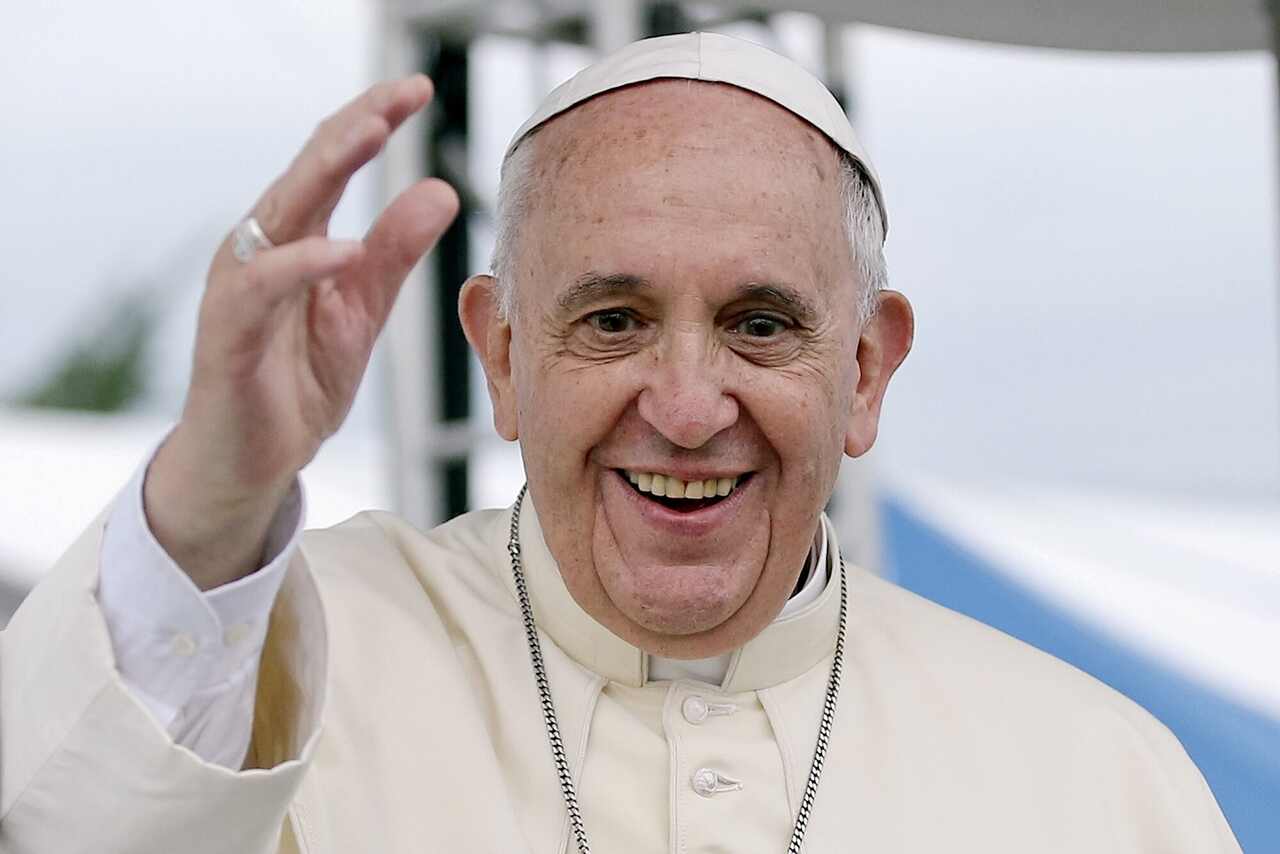
 Check out what Pope Francis said about the main technologies of today (Photo: Creative Commons)
After the death of Pope Francis last Monday (21), some of his statements about technology have resurfaced as wise thoughts for the future.
The Argentine cardinal Jorge Mario Bergoglio was one of the leaders who spoke the most about the impacts of technology. Among his statements, Pope Francis commented on the advances in artificial intelligence and robotics.
In November 2020, the Pope stated that AI “is at the root of the epochal change we are living,” while robotics “can make the world a better place if united with the common good.”
However, he added: “If technological progress increases inequality, then it is not true progress. Future advances should be oriented towards respecting the dignity of the person and Creation. Let us pray that the progress of robotics and AI are always at the service of humanity.”
Although admitting that AI can be a powerful tool in activities such as agriculture, education, and culture, he warned that the word “intelligence” in the term AI is misleading and that it can be overshadowed by the “shadow of evil” when used for military purposes.
In one of his last prayers this month, the Pope also spoke about people’s addiction to mobile phones, saying that he would love if people “looked less at screens and looked more into each other’s eyes.”
In 2019, during a visit from students in Rome, he also addressed the subject, asking young people to “free themselves from the dependence” on cell phones and compared the use of them to illegal substances.
“Mobile phones are a great progress and a great help, and they need to be used, but those who become slaves to their phones lose their freedom,” he said at the time.
A few years earlier, he suggested that the Bible should be used as much by people as their mobile phones. “What would happen if we treated the Bible like we treat our cell phones? What would happen if we turned to it when we forget? And if we read God’s messages in the Bible like we read messages on our cell phones?” he stated.
In 2017, he also addressed the issue of social media during World Youth Day. “On social media, we see young faces appearing in many images depicting more or less real events, but we don’t know how much of it all is really ‘history,’ an experience that can be communicated and endowed with purpose and meaning,” he said at the time.
Pope Francis also spoke about the privacy issues on social networks. “Everything has become a kind of spectacle to be examined and inspected, and people’s lives are now under constant surveillance,” he explained.
Still, he emphasized the positive power that the internet can have if used correctly. The Pope spoke about the topic after the Vatican launched, in 2019, a prayer app called Click To Pray.
“The internet and social media are a resource of our time, an opportunity to be in contact with others, to share values and projects, and to express the desire to form a community (…) The network can also help us pray in community, to pray together,” the Pope suggested.
Photo and video: Creative Commons. This content was created with the help of AI and reviewed by the editorial team.
