
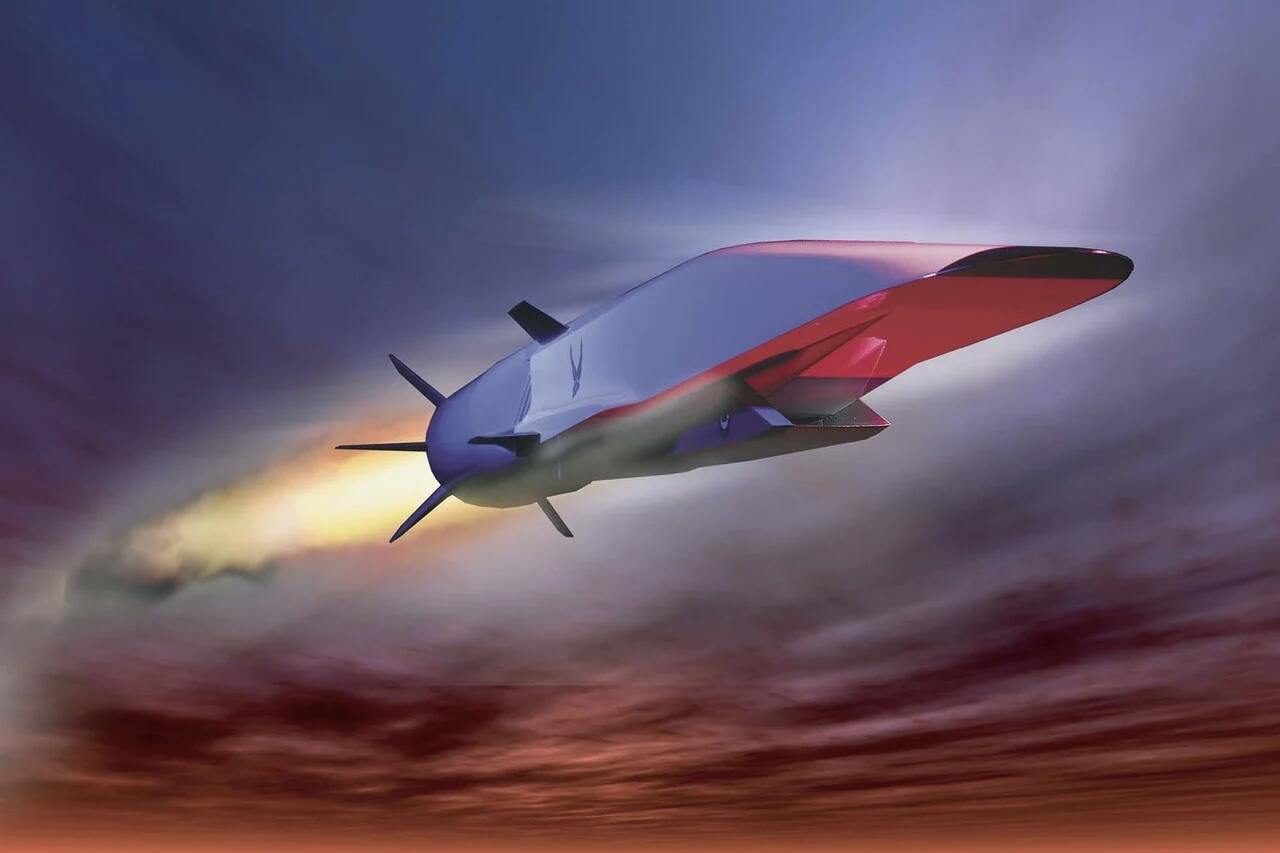
Chinese scientists have created a ceramic material capable of withstanding temperatures up to 3600°C in an oxidizing environment, surpassing the current thermal limits in hypersonic flight.
Even the most advanced hypersonic vehicles today face structural challenges under extreme thermal conditions.
According to the South China Morning Post, most materials begin to fail at temperatures lower than 3000°C.
The thermal protection panels of SpaceX’s Starship, for example, can withstand temperatures around 1371 degrees Celsius, according to some estimates.
But a recent study, published in the scientific journal Advanced Materials, details the impressive capability of carbide ceramic, which is composed of elements such as hafnium, tantalum, zirconium, and tungsten.
According to the researchers, the material “shows a significantly lower oxidation rate at 3600 degrees Celsius under laser irradiation than any previously reported material.”
The exceptional performance arises from the unique structure of the material’s oxide layer. Since the different elements in the material have varied affinities for oxygen at high temperatures, the material forms a dense oxide layer.
In particular, the tungsten skeleton, which is highly resistant to oxidation, filled with oxides of other elements, provides a barrier that prevents oxygen from penetrating deeper into the material.
“Our team has surpassed—for the first time in the world—this long-standing limit through a multicomponent high-entropy design,” said Chu Yanhui, professor at the South China University of Technology, to SCMP.
According to Chu, the new carbide ceramic “can be directly used as an outer protective layer for spacecraft or in energy systems to withstand direct exposure to high temperatures.”
Photo and video: Pixabay. This content was created with the help of AI and reviewed by the editorial team.
