
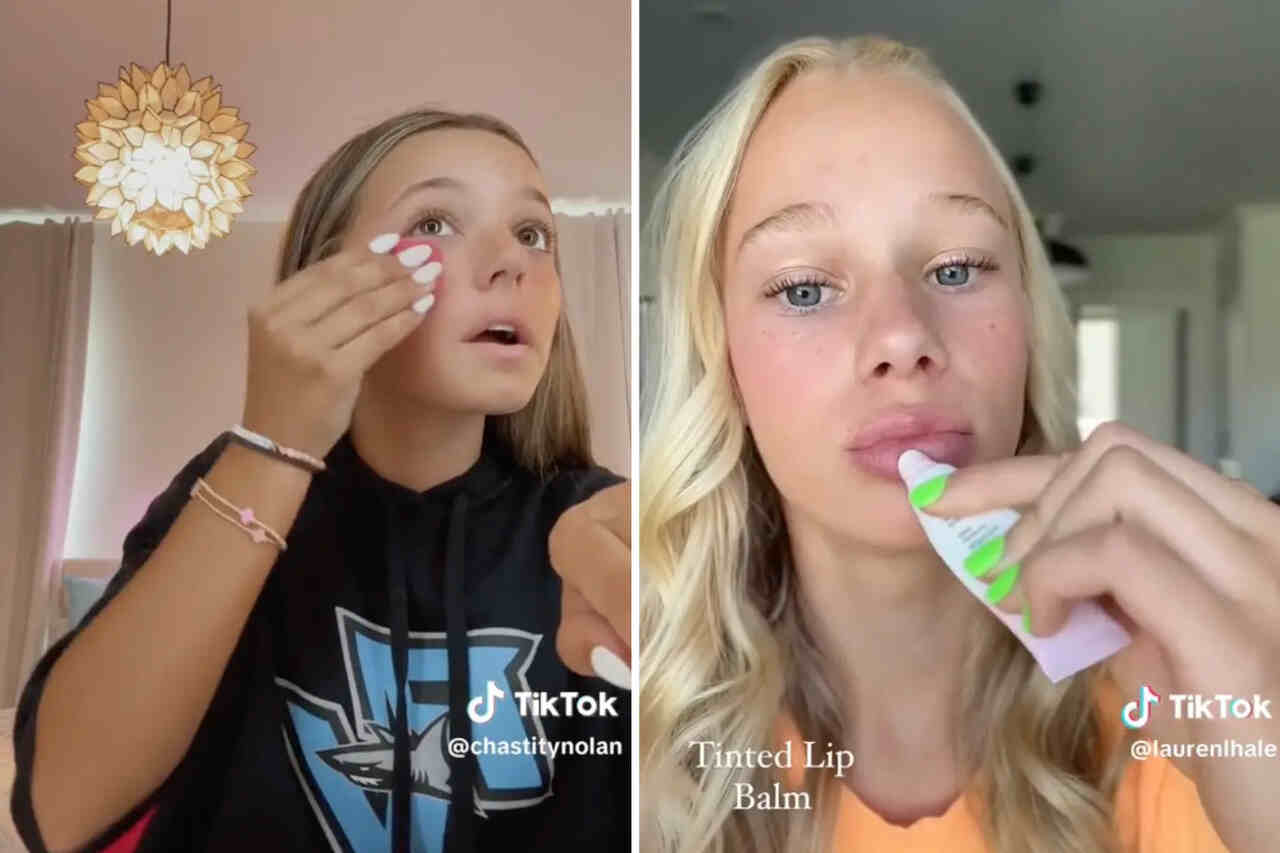
Skincare might seem harmless — a way to care for your skin that couldn’t possibly do harm. However, doctors are raising concerns about the growing obsession with it among very young girls.
In videos posted on TikTok, the trend can be seen among girls as young as 7 to 18 years old, many of whom already own large collections of skincare products.
In a survey conducted last year, more than three in four parents (76%) reported that their teenage daughters have a “skincare routine.”
But while the word “care” sounds positive, a study by Northwestern University found that many of these girls are spending money on products that may cause redness and don’t protect them from sun exposure.
For the study, published this week in the journal Pediatric, researchers created TikTok accounts pretending to be 13 years old and collected 100 unique videos of girls performing skincare routines suggested via the “For You” tab.
They analyzed the creators’ demographics, the products used, and the total cost of the routines. They found that girls aged 7 to 18 typically apply an average of six facial products at once, while some use more than a dozen.
“It’s problematic to show girls devoting so much time and attention to their skin,” said the study’s lead author, Dr. Molly Hales, a postdoctoral researcher and board-certified dermatologist at Northwestern University’s Feinberg School of Medicine.
In addition to the time commitment, researchers estimated that these children spend an average of $168 a month on products. In extreme cases, the total exceeds $500.
However, this obsession may be doing more harm than good. According to the researchers, one girl on TikTok suffered an allergic reaction on her face after applying more than 10 products in less than six minutes.
Hales noted that irritation often results from conflicting active ingredients or repeated use of the same active ingredient found in multiple products.
Girls also risk sun sensitivity and a skin allergy known as allergic contact dermatitis, which causes rashes.
Only 26% of daily skincare routines included sunscreen, the Northwestern study found, despite it being critical in preventing skin cancer.
Beyond health risks, mental well-being is also a concern. Beauty videos on social media can contribute to low self-esteem and pressure to conform to unrealistic beauty standards.
“The pursuit of health has become a kind of virtue in our society, but the ideal of ‘health’ is also strongly tied to ideals of beauty, thinness, and whiteness. The insidious side of ‘skincare’ is that it claims to be about health,” Hales warned.
Photo and video: TikTok @chastitynolan / TikTok @laurenlhale. This content was created with the help of AI and reviewed by the editorial team.
