
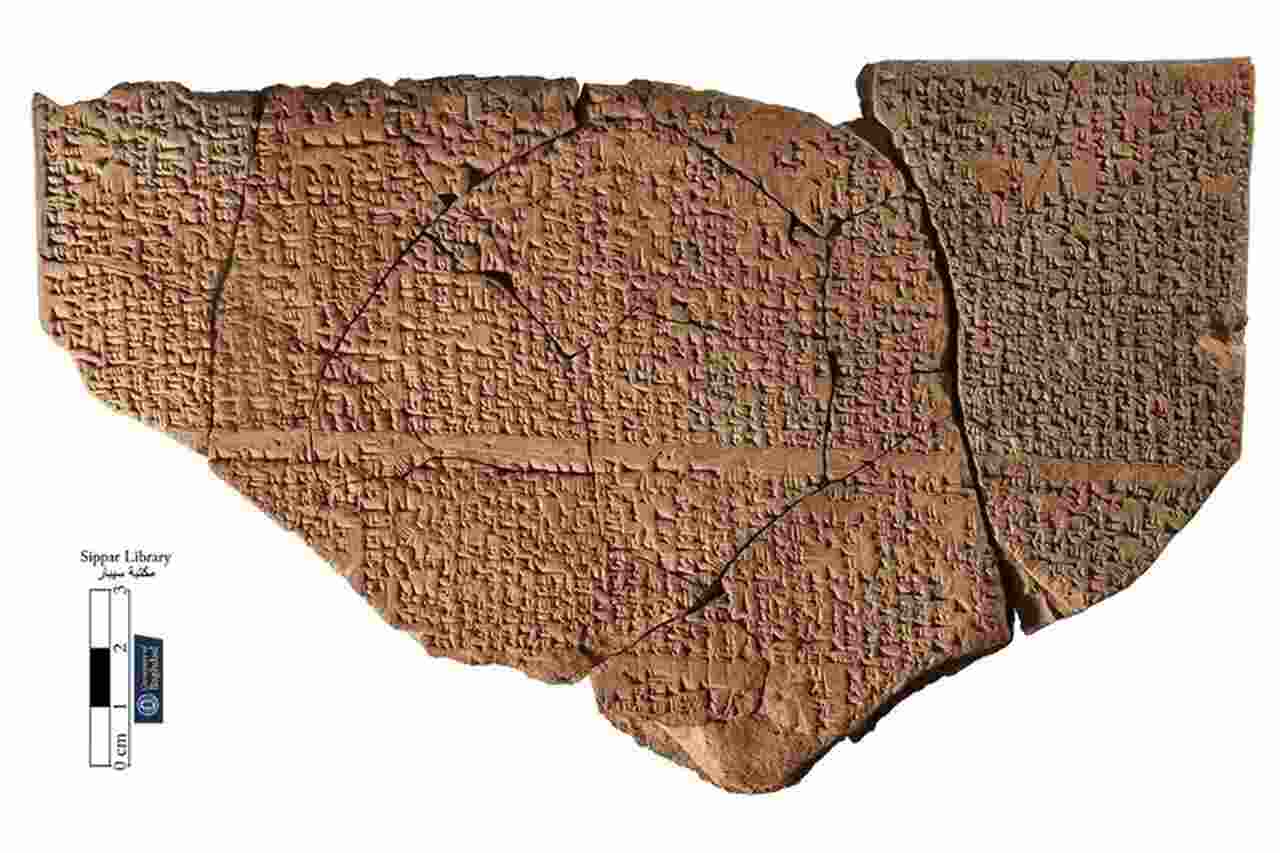
A cuneiform tablet was deciphered by an artificial intelligence tool, revealing that the poem was an anthem of ancient Babylon.
The anthem was discovered among the renowned collection of the Sippar Library in Iraq. According to legend, Noah hid this library before the flood.
The study, published in the journal IRAQ, was a collaboration between Ludwig Maximilian University of Munich (LMU) and the University of Baghdad.
For the research, the team led by Professor Enrique Jiménez of the LMU’s Institute of Assyriology used artificial intelligence through the Electronic Babylonian Literature platform to decipher the 250-line poem.
“With our AI-supported platform, we managed to identify thirty additional manuscripts belonging to the rediscovered anthem — a process that would have taken decades in the past,” said Jiménez.
Composed in the early first millennium BCE, the anthem circulated widely in the ancient world, as evidenced by the numerous surviving copies. “The anthem was copied by children in school. It is remarkable that such a popular text remained unknown until today.”
The anthem praises the city’s architecture, social cohesion, and the power of the Euphrates River:
“The Euphrates is its river — established by the wise lord Nudimmud
He clears the swamp, saturates the reed beds, pours his waters into the lagoon and sea…
Flocks and herds rest on green pastures,
Wealth and splendor — what is fitting for humanity —
Are granted, multiplied, and royally bestowed,” reads a passage from the anthem.
According to Jiménez, the anthem stands out for its rare depiction of nature and natural phenomena, something not present in other surviving Mesopotamian works.
Other passages describe the role of Babylonian women, specifically as priestesses. No earlier literature was as vivid in describing their religious and social duties.
The verses also mention the city’s attitude towards visitors, suggesting that outsiders were treated with respect, revealing more about Babylonian societal values.
Photo and video: Anmar A. Fadhil, Department of Archaeology, University of Baghdad. With permission from the Iraqi Museum and the State Board of Antiquities and Heritage. This content was created with the help of AI and reviewed by the editorial team.
