
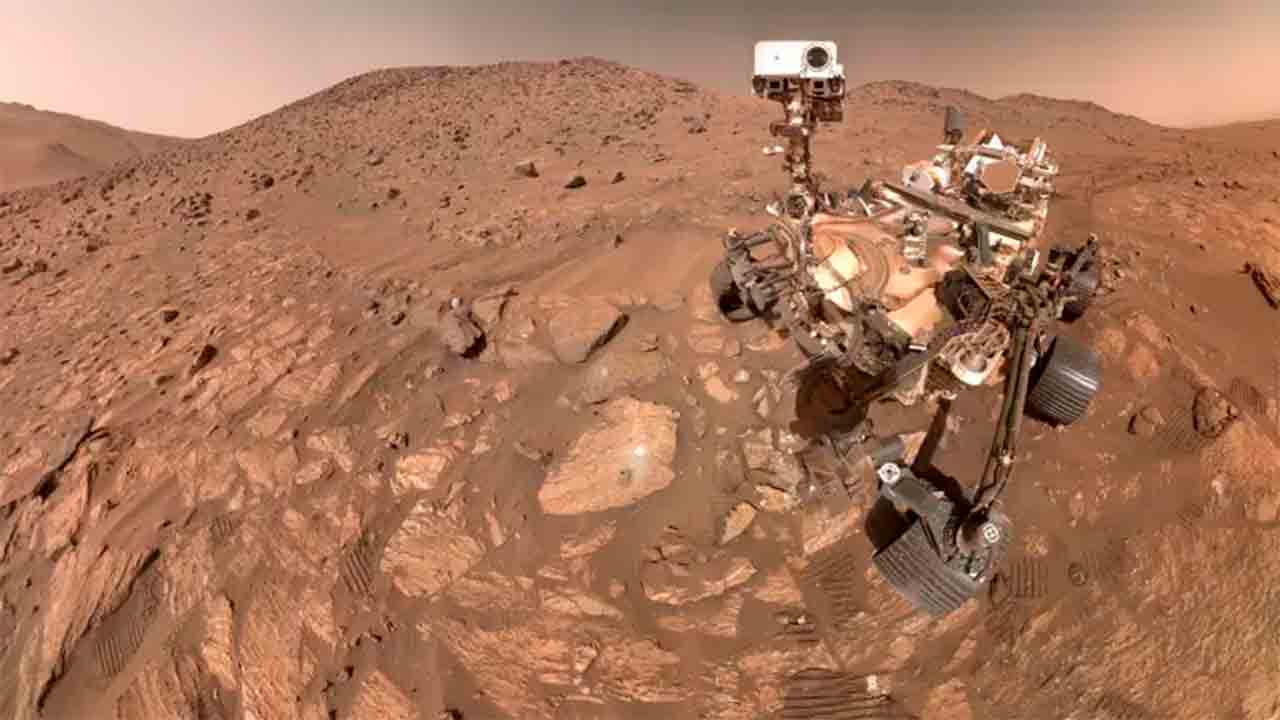
NASA has just revealed a groundbreaking discovery: a Martian rock may hold clues that microbial life once existed on the Red Planet.
The sample was collected by the Perseverance rover, which has been exploring Mars since 2021. The rock, nicknamed “Sapphire Canyon,” was extracted from a formation called Cheyava Falls, located in the Jezero crater, an ancient dried-up riverbed.
According to a study published in the journal Nature, the rock contains potential biosignatures — chemical and mineral markers that may originate from living organisms but still require further research to confirm whether they are indeed signs of life.
What NASA said
“This is the closest we have ever come to identifying life on Mars,” said Sean Duffy, acting administrator of the agency. He recalled that the mission was launched during the Trump administration and emphasized: “We want to put American astronauts on Martian soil and pursue the best science possible.”
Nicky Fox, another NASA director, highlighted that the data has already been made available to the entire scientific community: “It’s a huge achievement, but it still needs confirmation through further studies.”
What’s in the rock?
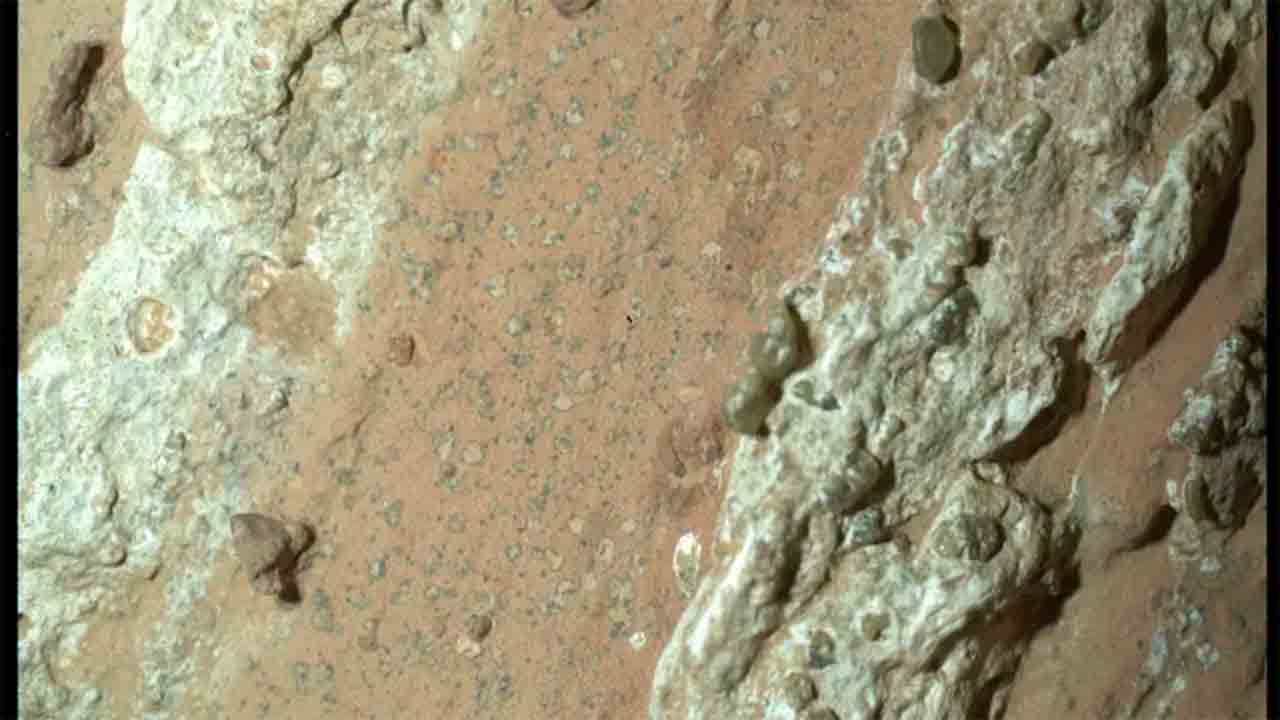
Scientists found clay, silt, organic carbon, sulfur, phosphorus, and oxidized iron (rust) in the stone — elements that, on Earth, are excellent for preserving traces of life.
In addition, the rock displayed colorful blotches nicknamed “leopard spots,” which contained minerals such as vivianite and greigite. These minerals can appear in environments with decomposing organic matter or even be produced by certain types of bacteria on Earth.
However, scientists caution that they cannot yet confirm these as signs of life, since such minerals can also form in the absence of organisms, under specific chemical conditions.
Mission surprise
The finding was even more surprising because it came from relatively young rocks. Until now, experts believed that traces of life would only be found in much older formations. This could mean that Mars remained habitable for far longer than previously thought.
What’s next?
The sample is part of a collection of 27 rock fragments gathered by Perseverance since its arrival in 2021. NASA hopes that, in the future, these samples will be brought back to Earth for even more detailed analysis.
In the meantime, the big question remains: are we alone in the universe?
Source and images: NASA
