
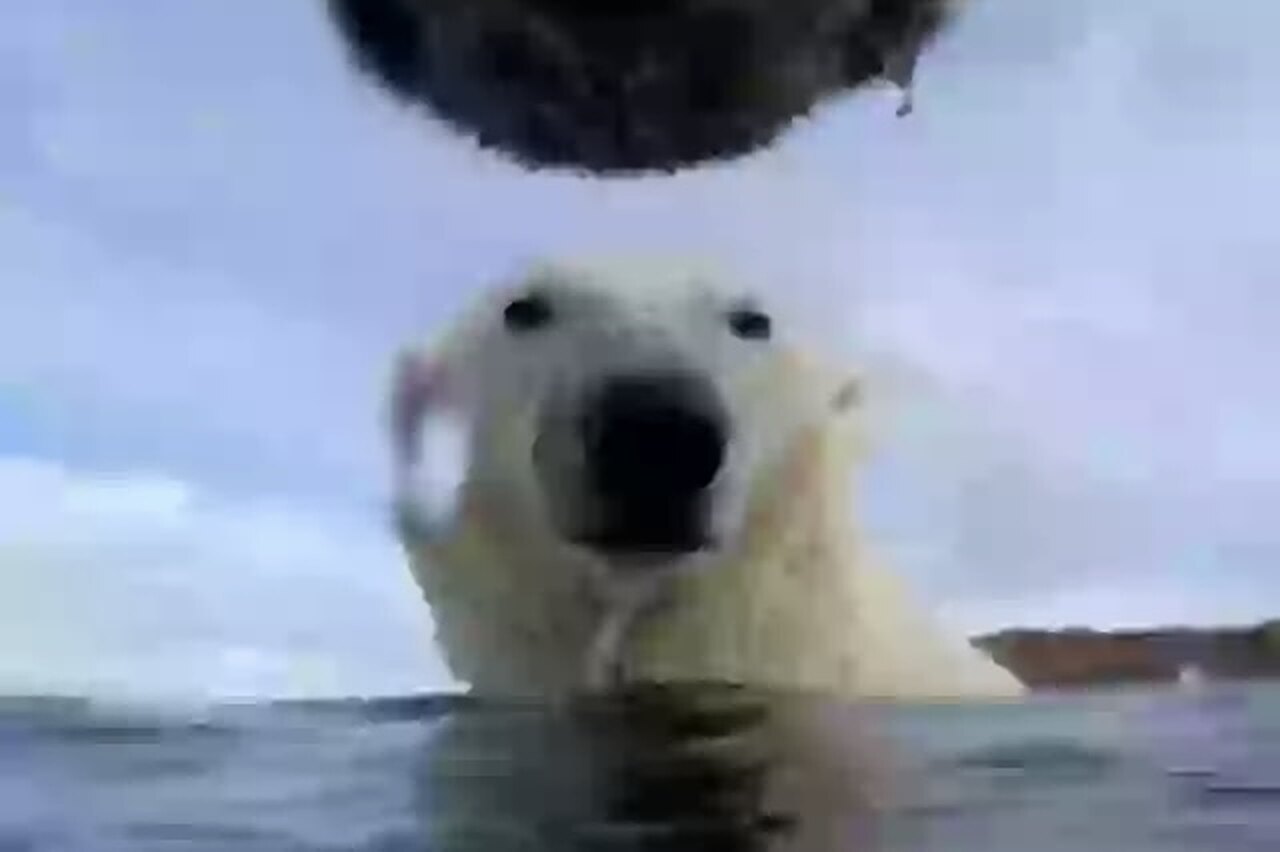
A group of scientists made a shocking discovery after attaching GoPro cameras to several polar bears in Canada.
+ Insider suggests that a new Tomb Raider may be announced soon
In the study published last year in the journal Nature Communications, the researchers detailed how they placed cameras on 20 polar bears from Hudson Bay, which, according to them, is now experiencing an ice-free period three weeks longer than in 1979.
More than 115 hours of footage were captured over the course of three years, giving the public a rare view into the life of a polar bear from its own perspective.
In the videos, polar bears can be seen feeding on bird carcasses, eating marine animals, fruit and grass, playing fight games in the water, and chewing on antlers.
“We were amazed. The footage […] really highlighted how intelligent these animals are, using different behavioral strategies to survive on land, even without access to their primary prey,” said Anthony Pagano, a wildlife biologist at the US Geological Survey (USGS) and lead author of the study, in an interview with Vox.
+ Click here to watch the video
Previously, scientists had predicted that polar bears could cope with spending more time on land by resting to conserve energy or by feeding on alternative prey such as plants and seabirds.
But they found that the bears use both survival strategies, based not only on the footage but also on other data collected by scientists, such as energy expenditure and movement measurements.
Despite the variety of approaches, none proved successful. All the polar bears—except one of the 20 individuals—lost weight. One of them lost nearly 80 pounds, which was extremely shocking to the researchers.
According to experts, relying on fruit as a primary food source will not help them in the long term. It is estimated that the polar bear population in this region has declined by 30% since 1987.
With that in mind, the study confirms that global warming will make the species’ survival even more difficult. “This study really sends the message that there is no salvation in land-based feeding to help polar bears during the ice-free period,” explained Andrew Derocher, a polar specialist at the University of Alberta.
Photo and video: USGS/Washington State University. This content was created with the help of AI and reviewed by the editorial team.
