
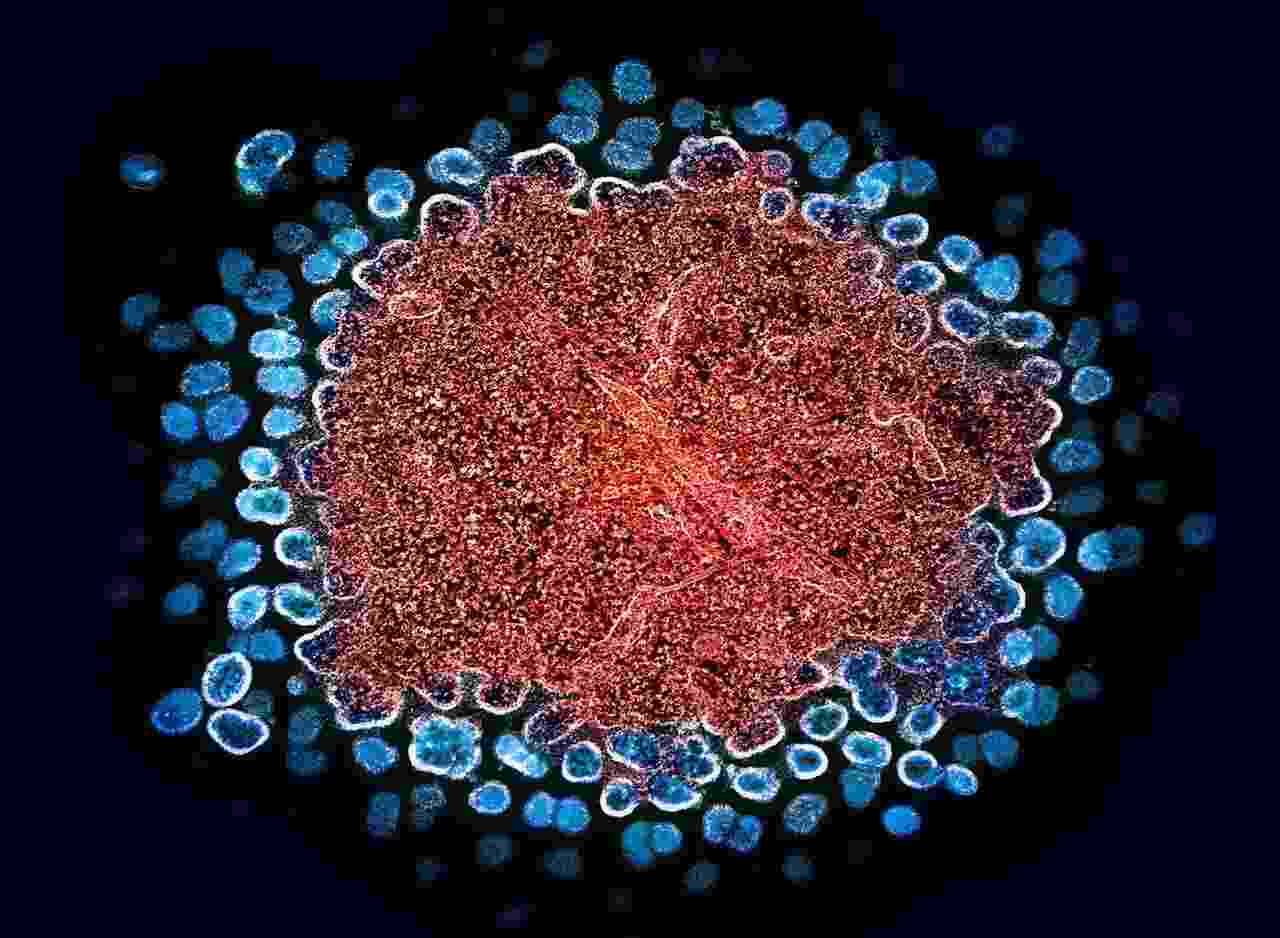
Living with HIV is a challenge faced by about 39 million people worldwide. While treatment can help them live better lives, there is currently no cure.
Antiretroviral therapy (ART) can reduce HIV levels in the body to the point where the virus becomes nearly undetectable, but completely eradicating it has long been considered impossible.
The biggest challenge in medicine’s search for a cure is that the virus hides in certain white blood cells. But now, researchers in Australia have made a surprising breakthrough.
Scientists have developed a new lipid nanoparticle called LNP X, capable of delivering mRNA to these cells. Once inside, the mRNA instructs the cells to reveal the hidden virus, potentially allowing the immune system or additional therapies to attack and destroy it.
Paula Cevaal, a researcher at the Doherty Institute and co-author of the study published last week in the journal Nature Communications, explained to The Guardian that this remarkable scientific achievement was “previously considered impossible.”
While she admits that not everything discovered in biomedicine becomes reality, she said scientists have never seen “anything as good as what we are seeing in terms of how well we can reveal this virus.”
“So, from that perspective, we are very hopeful that we will also be able to see this kind of response in an animal and eventually be able to do this in humans,” she said.
Although it may take years for clinical trials in humans to occur, the implications are enormous. These findings add to recent scientific advances suggesting that a cure for HIV may be near.
Photo and video: Unsplash. This content was created with the help of AI and reviewed by the editorial team.
